
LASIK
Seeing is Believing
LASIK laser vision correction surgery can correct nearsightedness, farsightedness, and astigmatism to reduce or eliminate the need for glasses and contact lenses. When you have LASIK at The Eye Institute of Utah you can feel confident that you are getting the best in vision correction. You will love the freedom that LASIK can bring to your life.


- What is LASIK?
- Benefits of LASIK
- What Does LASIK Correct?
- Am I a Good Candidate for LASIK?
- Take Our LASIK Quiz
- Preparing for LASIK
- What to Expect on the Day of LASIK Surgery
- LASIK Recovery
- LASIK Pricing and Financing
- LASIK Alternatives
- Why Choose The Eye Institute of Utah?
- Frequently Asked Questions About LASIK
What is LASIK?
LASIK, or laser-assisted in-situ keratomileusis, is a laser eye surgery that is FDA approved to reduce or eliminate the need for glasses by reshaping the cornea to
 Trusted Source
Food and Drug Administration
S
Go to Source
correct refractive errors.
1 The precise laser is able to reshape the cornea and restore crisp, clear vision.
Trusted Source
Food and Drug Administration
S
Go to Source
correct refractive errors.
1 The precise laser is able to reshape the cornea and restore crisp, clear vision.
How Does LASIK Work?
LASIK is a refractive surgery, meaning that it corrects refractive errors. What is a refractive error? In order to see as clearly as possible at a range of distances, light must refract (bend) properly onto the eye’s retina. If the eye’s curvature is irregular, the retina may not be able to appropriately focus rays of light. This leads to refractive errors, which cause images at certain distances to appear blurry. The LASIK procedure involves reshaping the cornea, which is the transparent front part of the eye that refracts light, in order to improve how the eye focuses light onto the retina at the back of the eye.
Benefits of LASIK
While individual experiences will vary, potential benefits of LASIK include:
- Freedom from the hassle and inconvenience of glasses and contacts
- LASIK is proven
Trusted Source
Is LASIK Safe?
Refractive Surgery Council
Go to Source
safe and effective
2
- Quick recovery
- Increased confidence
What Does LASIK Correct?
LASIK can correct a range of the most common refractive errors:
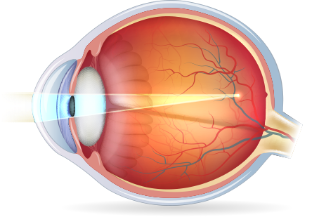
Myopia (Nearsightedness)
Myopia, or nearsightedness, is an eye condition that occurs when the cornea is too steep or the eye too long. This means the light that enters the eye can’t focus correctly, causing distant objects to appear blurry.
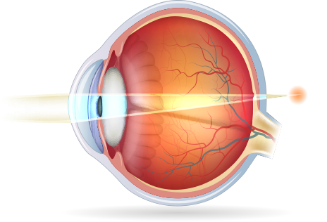
Hyperopia (Farsightedness)
Hyperopia, or farsightedness, is a condition where near and intermediate objects appear blurry. In farsightedness, the eye is too short, which causes the light to focus past the retina.
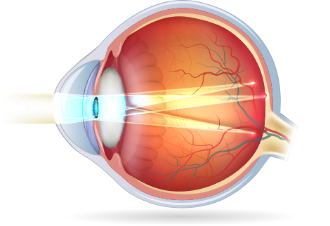
Astigmatism
Astigmatism is a common eye condition, caused by an irregularly-shaped cornea, that results in blurred vision or double-images at all distances. Previously, people with high amounts of astigmatism were not candidates for laser vision correction. However, today’s technology can correct astigmatism.

Am I a Good Candidate for LASIK?
If you are interested in freedom from glasses or contacts, LASIK could be right for you. Ideal candidates for
Trusted Source
Are you a LASIK Candidate?
Refractive Surgery Council
Go to Source
LASIK
3:
- Are in good general health
- Do not have any eye diseases or recurring eye infections
- Have had a stable vision with no prescription changes for at least two years
- Have adequate corneal thickness and are within prescription parameters (your eye doctor will determine these factors during your eye exam.)
Wondering if LASIK could improve your quality of life?
Take our free LASIK Quiz to find out!
Preparing for LASIK
Your first step is a no-obligation LASIK consultation appointment. This appointment is your opportunity to learn more about your LASIK options and get answers to any questions you may have. You will meet with one of our eye doctors who will perform an eye exam and discuss your goals with you in order to determine if you are a candidate for LASIK. If you decide that LASIK is right for you, your eye doctor will give you detailed pre-operative instructions, which will include stopping contact lens wear for a period of time before your LASIK procedure.

Book a FREE Consultation Online 24/7
What to Expect on the Day of Your LASIK Eye Surgery
On the day of your LASIK procedure, your eyes will be numbed with anesthetic eye drops and you may be offered a sedative medication to help you relax. Your LASIK surgeon will review your treatment plan with you before beginning your surgery.
The actual procedure involves two steps:
- The first step in LASIK is the creation of a corneal flap. Years ago, this was done manually using a microkeratome blade, but now we offer only advanced blade-free, all laser LASIK. The WaveLight FS200 femtosecond laser creates a precise, clear corneal flap in about 6 seconds, which can reduce complications associated with a blade method.
- The second step in LASIK is reshaping the corneal tissue to correct nearsightedness, farsightedness and astigmatism. For this step, we use the WaveLight EX500 excimer laser, which is the latest technology that provides wavefront optimized treatments in every procedure.
Once the vision correction procedure is complete, the corneal flap is returned to its original position where it self-seals and acts as a natural bandage.
LASIK Recovery
Recovery is different for everyone, but most LASIK patients are generally able to drive, work and resume regular daily activities within 24-48 hours after surgery. You may experience mild irritation, scratchiness, sensitivity to light, and blurry vision in the first few hours after surgery. It is critically important that you follow all of your eye surgeon’s precautions and instructions so that your eyes heal properly.
You will be given special eye shields to wear while sleeping. You should avoid strenuous exercise and vigorous activities for about one week after LASIK. You will need to refrain from swimming for several weeks after surgery.
LASIK Pricing and Financing
At The Eye Institute of Utah, we are committed to putting better vision within your reach. We offer free consultation appointments, competitive and inclusive pricing, and convenient financing options.*
Our base pricing for LASIK is $2,550 per eye. We regularly offer discounts and special pricing. Vision correction promotions also apply to some other vision correction surgeries, so you can be sure you’ll get the procedure that is best for you.
LASIK Alternatives
Some people who are interested in vision correction surgery are not candidates for LASIK. Common reasons include corneas that are too thin or a high level of nearsightedness. While LASIK is popular, we offer other very effective vision correction procedures. PRK, or photorefractive keratectomy, uses similar technology to reshape the cornea, but it does not involve making a corneal flap so it may be an option for patients with thin corneas. ICL is a great option for patients who have a high level of nearsightedness, as well as those who want an additive technology that does not permanently change the shape of the cornea and can be reversed if needed.
Learn more about LASIK alternatives.
Refractive Lens Exchange (RLE)
Refractive Lens Exchange (RLE) is a LASIK alternative that can also treat or prevent cataracts. This procedure is customizable and LASIK discounts and vision correction promotions do not apply to RLE. Examples of custom RLE vision packages:
- Custom Vision Package $3,550/eye
- Custom Vision for Astigmatism $4,450/eye
- Custom Vision for Presbyopia $5,705/eye
Why Choose The Eye Institute of Utah for Your Vision?
Our eye doctors, ophthalmologists, and eye surgeons are among the best in their field and are committed to offering high quality eye care for patients in Salt Lake City and the greater Intermountain West. Our team of experts includes experienced LASIK surgeons Dr. Zachary Zavodni and Dr. Samuel Passi. Here are some of the reasons Eye Institute of Utah is a leader in LASIK:
- We only offer All-Laser, Blade-free LASIK
- We use leading-edge technology
- We offer Contoura™ Vision Topography-Guided Laser Vision Correction, one of the most advanced laser vision correction platforms available
- If LASIK isn’t right for you, we offer a wide variety of alternatives
- We offer LIFE IN FOCUS warranty that ensures great vision for years to come
- We work with ALL optometrists in Utah and the surrounding areas
- Our LASIK pricing is competitive and transparent
- We offer financing options with affordable monthly payments

In my opinion The Eye Institute of Utah is the best complete Eye clinic in Utah. I have been going there for 20 years. They performed LASIK surgery on both [of my] eyes and now they removed a cataract and installed a lens from one eye. They have been doing checkups and evaluations on my eyes most of my life. I trust them with my eyesight.
D.A.
Comparison Chart
See how the most popular vision correction options compare,
after applying our current discount of $1,200 off ($600 off per eye).


(Both Eyes) $3,900 $3,900 $7,000 $7,500
Frequently Asked Questions About LASIK
Can I use my HSA or FSA for LASIK?
Yes, most medical spending plans can be used for LASIK. Talk to your plan administrator about your plan details.
Does LASIK hurt?
No, your eyes will be numbed during the procedure. You may feel slight pressure, but you will not feel pain during the procedure.
How soon can I go back to work?
Many patients return to work the next day. If you have a job that is very physically vigorous you may need to take a few additional days off of work.
Can I wear eye makeup after LASIK?
You will need to refrain from using eye makeup for one week after LASIK. We also advise to not use any eye makeup for three days prior to your procedure and to throw out any old eye makeup.
What are the risks of LASIK?
Any surgical procedure carries some risk of complications or side effects, but fewer than
Trusted Source
American Refractive Surgery Council.
LASIK Complication Rate: The Latest Facts and Stats You Should Know.
Go to Source
1% of patients experience
complications after LASIK.4 The few side effects that are common during the healing period, such as dry eyes, light sensitivity, and halos, are typically temporary.
Is LASIK permanent?
Yes, and your vision correction from LASIK is permanent. However, your eyes can change as you age. For example, most people will experience an age-related loss of near vision called presbyopia which can create the need for reading glasses at some point in their lives. Retinal and corneal eye diseases or the onset of age-related eye conditions such as cataracts and glaucoma can also change your vision later in life.
How does LASIK follow up work if I live out of state?
If you live out of state, you can co-manage with a local doctor for your pre and post op care. In other words, we would see you on the day of your surgery and your optometrist would see you for the remaining visits. If you live out of state and would like to know who to co-manage with, please give our Refractive Coordinator a call at 801-266-2283.
Sources
1 U.S. Food and Drug Administration. LASIK. Available: https://www.fda.gov/medical-devices/surgery-devices/lasik Accessed May 28, 2021
2 Refractive Surgery Council. Are you a LASIK Candidate? 5 guidelines you should know. Available: https://americanrefractivesurgerycouncil.org/general-lasik-candidate-guidelines/ Accessed April 28, 2023.
3 American Refractive Surgery Council. Are You a Candidate for LASIK? Available: https://americanrefractivesurgerycouncil.org/general-lasik-candidate-guidelines/ Accessed June 1, 2021
4 American Refractive Surgery Council. LASIK Complication Rate: The Latest Facts and Stats You Should Know. Available: https://americanrefractivesurgerycouncil.org/lasik-complication-rate-latest-facts. Accessed June 1, 2021.
Page Updated:
The Eye Institute of Utah Doctors have either authored or reviewed and approved this content.